Outdoor Living And Entertaining At Westwood Homes
July 9, 2026
July 9, 2026
If you picture your ideal Westwood home, chances are the backyard is part of it. In a town where outdoor space, established lots, and thoughtful home design all matter, exterior living areas can shape both your daily routine and your home’s overall appeal. Whether you are planning to enjoy your property for years or thinking ahead to resale, a smart outdoor strategy can help you make decisions with confidence. Let’s dive in.
Westwood’s setting makes outdoor living feel like a natural extension of home life. The town is about 12 miles southwest of Boston and offers commuter rail and MBTA bus access, while also maintaining recreational areas, conservation land, playgrounds, ball fields, and an indoor pool facility.
That mix of convenience and open space supports a lifestyle where patios, decks, lawns, and landscaped gathering areas feel especially relevant. Westwood also has a strong ownership profile, with an 87.3% owner-occupied housing rate, and Census QuickFacts lists a median owner-occupied home value of $1,041,500.
The town’s connection to open space is another reason outdoor features resonate here. Westwood highlights local resources such as community trails, Lowell Woods, Currier Reservation, Hale Reservation, and other conservation areas, and Hale includes more than 500 acres in Westwood. For many buyers and homeowners, that backdrop makes a well-planned yard feel aligned with the broader character of the community.
Outdoor entertaining in Westwood is not just a summer idea. As a nearby climate reference, NOAA’s Boston Logan 1991 to 2020 normals show an average high of 82.1°F in July and 42.2°F in December, along with 43.59 inches of annual precipitation and 49.2 inches of annual snowfall.
That matters because your outdoor spaces need to perform in more than one season. Snowfall is concentrated from November through April, with January and February each averaging about 14.3 to 14.4 inches, so durability and drainage deserve just as much attention as style.
If you want spaces that work longer through the year, focus on practical comfort first. Covered seating, hardscape materials that can handle freeze-thaw conditions, good runoff management, and well-placed lighting can make patios and decks more usable in spring and fall.
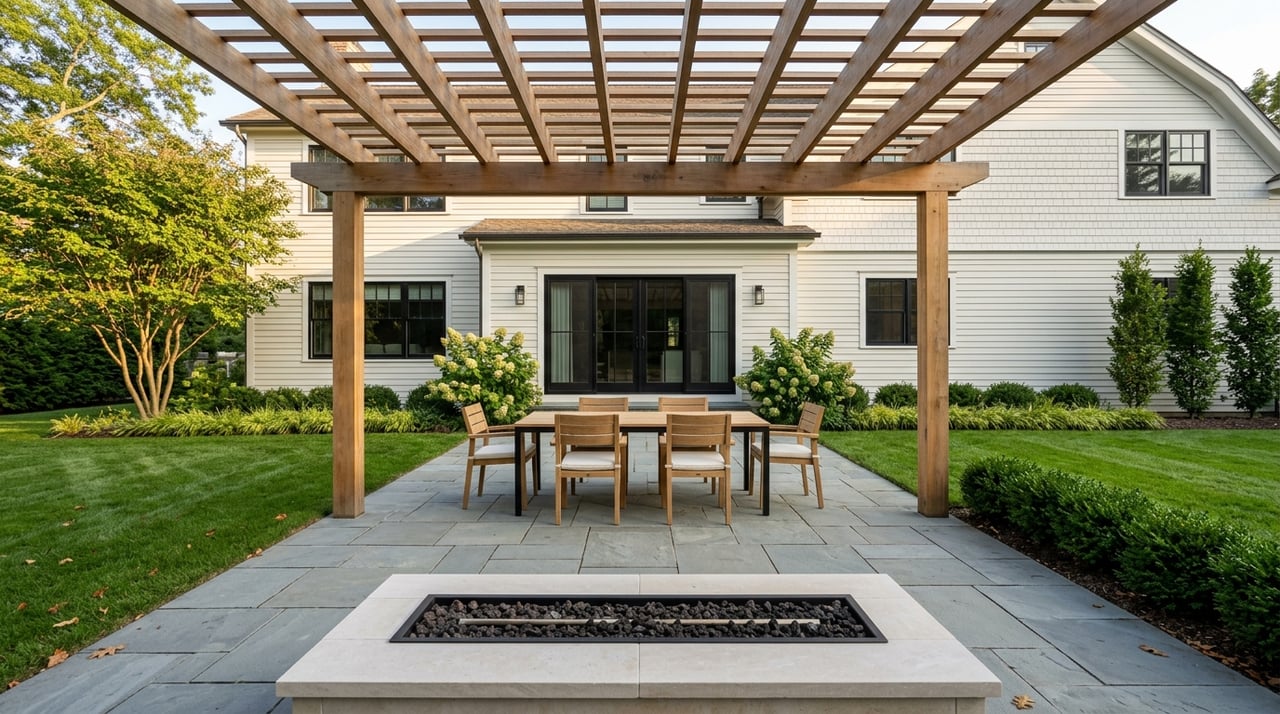
In Westwood, the most effective outdoor spaces usually feel connected to the house and easy to maintain. Think of a patio off the kitchen, a deck for outdoor dining, a lawn area for everyday use, and landscaping that adds privacy without creating constant upkeep.
That approach also lines up with broader outdoor-living trends. Homeowners are increasingly using yards as distinct spaces for cooking, dining, relaxing, gardening, and activity, with an emphasis on cohesive design, lower-maintenance features, covered seating, lighting, and planting that fits the local setting.
For resale-minded homeowners, some upgrades tend to make more sense than others. According to the NAR outdoor-features report, REALTORS® estimated cost recovery at 100% for an overall landscape upgrade, 95% for a new patio, 89% for a new wood deck, 87% for tree care, and 83% for irrigation.
If you are deciding where to invest first, a layered plan usually works best. It helps you improve how the property lives now while avoiding overspending on features that may not return as much value.
A practical sequence for many Westwood homes looks like this:
This order reflects both value and logistics. Foundational upgrades often improve appearance, function, drainage, and usability right away, while also making later additions easier to plan.
Many Westwood properties benefit from simple, well-zoned outdoor layouts rather than one oversized feature. A dining area near the kitchen, a separate sitting area, and a modest open lawn can create flexibility without making the yard feel crowded.
For homes with mature trees or deeper setbacks, layered landscaping can help define spaces naturally. That can support privacy and visual structure while keeping the yard open enough for gatherings, play, or quiet evenings outside.
Lighting is often one of the most overlooked improvements. It can extend outdoor use into the evening, improve circulation around steps and walkways, and make a patio or deck feel finished without requiring a major construction project.
Pools and fire features can absolutely enhance your lifestyle, but they should be approached with realistic expectations. If your main goal is personal enjoyment, they may be worth it. If your goal is resale efficiency, they are usually not the first place to start.
The same NAR report estimated cost recovery at 56% for an in-ground pool addition and 56% for a fire feature. In other words, these can be compelling amenities, but they often make the most sense after the basics are already in good shape.
Lot layout, budget, and permitting also matter. In some cases, a smaller-scale solution can feel more integrated and practical than a large, expensive project.
Before starting outdoor work, it is important to understand where permits may come into play. Westwood’s Building Division issues permits for new construction, repairs, renovations, and demolition, and reviews plans for compliance with the state building code and town zoning bylaw.
Timing matters too. The town notes that permit processing can take up to 30 working days, so it is wise to plan early if your project involves structures, setbacks, utilities, or changes tied to the house.
A few examples are especially relevant for outdoor projects:
If you are considering a pool, local requirements become even more important. Westwood states that a pool must meet accessory-structure setback requirements measured to the water line.
The town also requires a barrier that complies with the Massachusetts State Building Code for all pools, including above-ground pools. Westwood notes that barrier rules are specific and can involve locks, alarms, and gate openings.
For propane-based outdoor features, Westwood says propane installations must be preapproved by the fire department. The town also notes that trenching or substantial earth movement requires Conservation Commission approval.
Fire-related features are an area where homeowners should be especially precise. Westwood Fire says open burning is allowed only from January 15 through May 1, requires daily confirmation, must be brush only, must be 75 feet from structures, and may not include grass, rubbish, hay, leaves, tires, or building materials.
Because these rules are specific, it is best not to assume that a casual backyard setup is automatically allowed. If you are exploring a permanent or propane-related feature, confirm the current requirements with the appropriate local department before beginning work.
The best outdoor spaces in Westwood usually balance enjoyment, maintenance, and long-term value. You do not always need a dramatic renovation to make your yard more functional. Often, the winning formula is a clean landscape plan, strong patio or deck access, lighting, and a layout that supports how you actually live.
If you are preparing to sell, these choices can also help your home show more effectively. Buyers often respond to exterior spaces that feel finished, connected to the house, and easy to imagine using from spring through fall.
If you are weighing which outdoor improvements make sense for your home in Westwood, a local, property-specific strategy matters. Theresa David can help you evaluate which features fit your lot, your goals, and your home’s place in the market.
Contact Theresa today to learn more about her unique approach to real estate and how she can help you get the results you deserve.