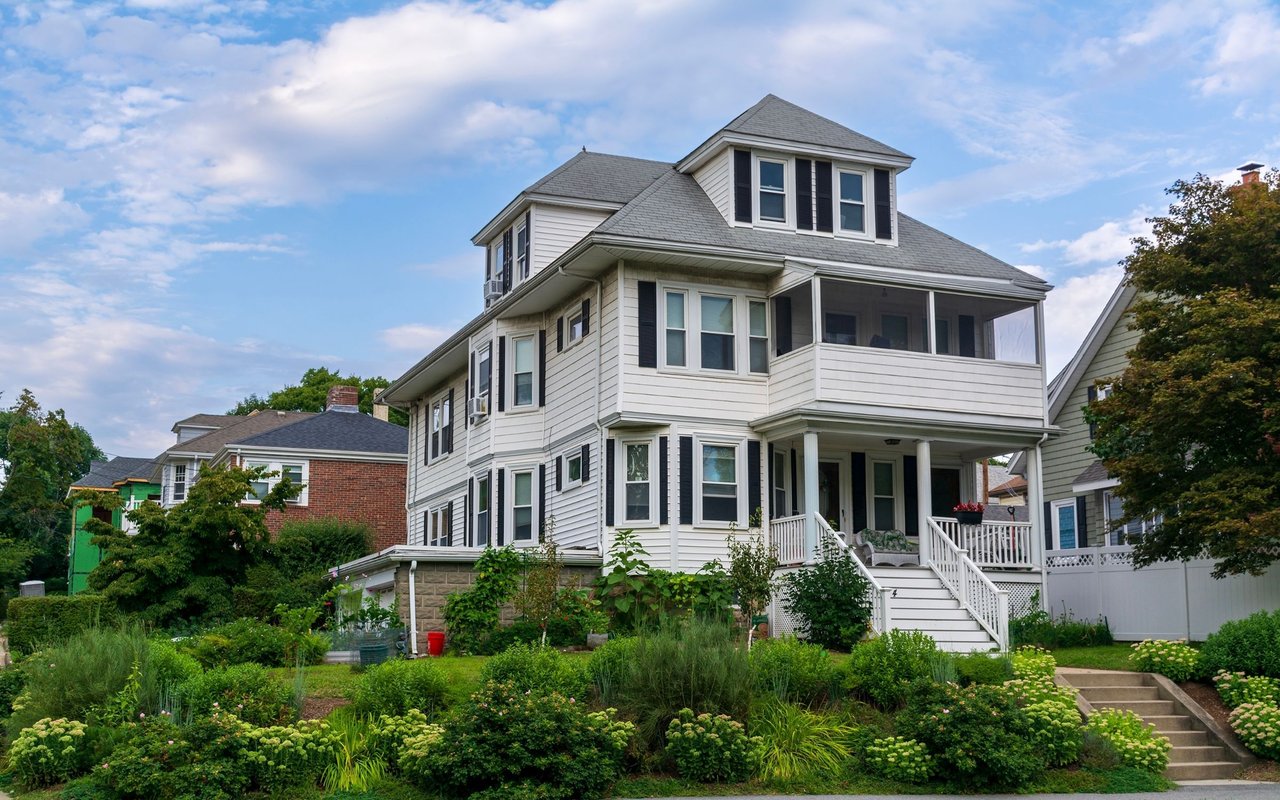
How Experienced Agents Determine Pricing For Westwood Homes
May 14, 2026
May 14, 2026
If you look at Westwood home values and wonder why two houses that seem similar can land at very different prices, you are asking the right question. In this market, pricing is not about picking a number from a website or using a townwide average. It is about reading the evidence correctly, adjusting for the details that matter, and understanding how Westwood buyers respond to location, condition, and competition. Let’s dive in.
Westwood is not a one-size-fits-all market. The town sits near Routes 95/128 and 93, has two commuter rail lines, MBTA bus service on Routes 1 and 1A, and includes University Station as a major mixed-use area. That means access, traffic patterns, and proximity to transit or commercial corridors can affect buyer demand from one part of town to another.
Westwood is also a mature, land-constrained suburb. According to the town’s comprehensive plan, more than 80% of the land area is already committed through development or preservation, and 55% of land is single-family residential. In an established market like this, pricing often comes down to small but meaningful differences in lot size, setting, privacy, and the overall utility of the property.
The town’s housing profile adds another layer. Census data shows Westwood had 16,533 residents in 2024, an owner-occupied housing rate of 87.3%, a median household income of $223,125, and a median value of owner-occupied housing of $1,041,500. Those figures help explain why buyers in Westwood tend to be selective and why presentation, location, and home quality can have an outsized effect on price.
A disciplined pricing strategy begins with recent sold homes, not asking prices. Massachusetts guidance on comparative market analysis says the strongest comparables are the most recent sales with the fewest dissimilarities, ideally in the same neighborhood. That matters because a list price shows seller intent, but a closed sale shows what a buyer actually paid.
In Westwood, that distinction is important. Recent sold data shows a broad range of closings, roughly from $701,000 to $2,075,000, and Redfin reported a median sale price of $1,157,662 in March 2026. When the spread is that wide, a townwide average can give context, but it cannot tell you what your home should list for.
An experienced agent narrows the comp set carefully. Instead of asking, “What is the average price in Westwood?” the better question is, “Which recent sales would a serious buyer compare to this home?” That is where pricing becomes more accurate and more strategic.
In Westwood, homes that appear similar on paper may not compete the same way in the market. The town’s comprehensive plan notes early estate areas, corridor-based development, and a long history of teardown and rebuild activity. As a result, homes with similar bedroom counts or square footage may still attract different buyers and different price points.
For example, one home may sit on a more usable lot, have a better interior flow, or offer a quieter setting. Another may be a newer rebuild with larger scale and more current finishes. A third may be near a commuter corridor, which can be a plus for some buyers and less appealing for others.
This is why price per square foot is only a check, not the answer. It can help frame a range, but it does not fully account for condition, layout, lot utility, or micro-location. Experienced agents use it as one tool, not the final decision-maker.
Condition often plays a larger role in pricing than sellers assume. Automated estimates and broad market snapshots may not fully reflect a renovation, addition, deferred maintenance, or the quality of updates. In a town like Westwood, where rebuilds and significant improvements can materially affect value, those gaps matter.
A strong pricing analysis looks beyond square footage and bedroom count. It considers:
If your home has been thoughtfully updated, that should be reflected in the pricing discussion. If it needs work, that also needs to be addressed honestly. Correct pricing depends on how buyers are likely to compare your property to the alternatives they can actually buy right now.
Even a strong home does not price in a vacuum. Westwood’s active inventory is limited, and that can support pricing, but it also means each competing listing gets more attention. Zillow showed 25 homes for sale and eight new listings as of March 31, 2026, while Redfin described Westwood as very competitive.
That competition is not just about how many homes are available. It is also about how quickly they are moving and how buyers behave once they find the right property. Redfin reported a median of 21 days on market, with many homes receiving multiple offers, average homes selling for about 1% above list, and hot homes selling for about 6% above list.
An experienced agent uses that information to answer a practical question: Should this home be priced to lead the market, meet the market, or leave room for negotiation? The answer depends on your home’s position relative to current inventory, not just on what sold a few months ago.
Many sellers check an automated valuation before they call an agent. That is understandable, but it is only the beginning of the conversation. Zillow says its Zestimate is an estimate of market value, not an appraisal, and notes that unique, updated, or hard-to-compare homes can be harder to value accurately.
That limitation is especially relevant in Westwood. A property with estate-style land, a newer rebuild, a distinct setting, or substantial updates may not fit neatly into an automated model. If public records or home facts are incomplete, the estimate may miss part of the story.
Automated tools can provide a rough reference point. They are less useful when a home is unusual, highly improved, or located in a part of town where buyer preferences shift from street to street. In those cases, a human analysis is usually far more reliable.
Another common source of confusion is assessed value. Westwood’s assessing department values property for taxation, updates values according to market conditions, and submits them to the state for certification every five years. For FY26, the residential tax rate is $12.87 per $1,000 of assessed value.
That information matters for carrying costs, but it should not be confused with a list price recommendation. In Massachusetts, assessors are valuing property for local taxation at full and fair cash value as of January 1 each year. That is a different purpose from pricing a home for today’s market.
In other words, your assessment can be useful context, but it is not a pricing strategy. Serious pricing work still needs to come back to current sold comparables, active competition, and how buyers are likely to perceive your specific property.
A thoughtful pricing meeting should feel clear, evidence-based, and specific to your home. It should not rely on broad averages alone, and it should not lean too heavily on online estimates. In Westwood, a disciplined review typically includes several moving parts.
Here is what experienced agents usually evaluate:
This process is both analytical and practical. The goal is not just to estimate value, but to position the home so that buyers respond with confidence.
The higher the price point, the more judgment tends to matter. Westwood has estate areas, larger lots, rebuild activity, and a broad sold-price range. In that kind of market, upper-tier homes often have fewer direct comparables, which means pricing requires more interpretation.
That does not mean pricing is guesswork. It means the analysis needs to be narrower, more tailored, and more thoughtful. An experienced agent looks closely at what buyers in that price band expect and how your property compares in scale, finish, location, and overall presentation.
For sellers of higher-end homes, the risk of mispricing can be significant. Pricing too high can reduce early momentum, while pricing too low can leave value on the table. The right strategy usually comes from balancing hard data with local judgment.
Good pricing is not about chasing the highest number possible on day one. It is about finding the number that makes the market take your property seriously. In a competitive town like Westwood, that often means building a pricing plan that reflects both the evidence and the buyer psychology behind it.
When pricing is done well, it creates clarity. Buyers understand where the home fits, showing activity is stronger, and offers are more likely to reflect the home’s true market position. That is why experienced agents treat pricing as a strategic launch decision, not just a spreadsheet exercise.
If you are preparing to sell in Westwood and want a pricing strategy grounded in local evidence, tailored analysis, and calm professional guidance, connect with Theresa David to schedule a free consultation.
Contact Theresa today to learn more about her unique approach to real estate and how she can help you get the results you deserve.